
Formal emails help you communicate professionally, establish credibility, and avoid misunderstandings in business communication. They follow a structured format, use respectful language, and are commonly used when writing to clients, employers, colleagues, or external partners.
Understanding Formal Emails
Writing a formal email involves adhering to a set of conventions that separate it from its informal counterpart. This means starting with a polite greeting, including a clear and concise subject line, and ensuring the body is structured in paragraphs that logically convey your message. You’ll want to use precise language and maintain a polite yet professional tone throughout, finishing off with a formal closing. A formal email is your digital handshake; it’s about conveying professionalism and competencies.
When to Use Formal Emails
Formal emails come into play in scenarios where you’re addressing someone on a professional level or when unsure of the relationship dynamics. Consider using a formal email for job applications, business communications with new clients, important announcements, or when communicating across hierarchical levels. Formality signals respect, and in these instances, it’s better to err on the side of caution.
When to Avoid Formal Emails
Sometimes, a formal tone can be too rigid, leading to stilted communication. You’ve probably experienced moments where a more informal communication style feels appropriate—like when you’ve established rapport with your coworker or are corresponding with team members on routine tasks. Here, informal emails can encourage a relaxed and open exchange, fostering better collaboration and creativity. Gauge the relationship and past interactions to decide whether a formal or informal approach is apt.
Common Mistakes in Formal Emails
A prevalent mistake is overloading information. Being concise yet informative is crucial. Avoid jargon that might not be universally understood or vague language that muddles your message. Another slip-up is using too casual a tone when formal is warranted, which may come off as dismissive or unprofessional. And don’t forget to proofread! Errors in a formal email can make you appear careless.
Best Practices for Writing Formal Emails
Start with a clear subject line—this isn’t the space for convoluted sentences. Address the recipient respectfully, using titles and last names where appropriate (e.g., “Dear Mr. Smith”). Keep your language polite yet assertive; there’s a fine line between being polite and appearing unsure. Format your message with distinct sections to enhance readability. And always conclude with a formal closing, such as “Sincerely” or “Best regards,” followed by your full name and contact information.
Formal vs. Informal Emails
The distinction between formal and informal emails often hinges on tone, structure, and purpose. Formal emails are marked by a polished tone, structured format, and clear objectivity. In contrast, informal emails might include slang, abbreviations, and a more conversational tone, largely depending on the relationship with the recipient. Recognizing the right context for each style can shape how effectively your message is received.
Real-World Scenarios
Imagine you’re reaching out to a potential client you’ve never met. A formal email can set the right tone for your professional relationship, demonstrating both respect and competence. Or consider submitting a report to your supervisor; a formal tone shows regard for their position and your role. On the other hand, drafting a quick update for your team who you interact with daily might benefit from an informal touch.
Examples
Here’s how a formal email may look when reaching out to a new business contact:
How WriteMail.AI Helps You With Formal email
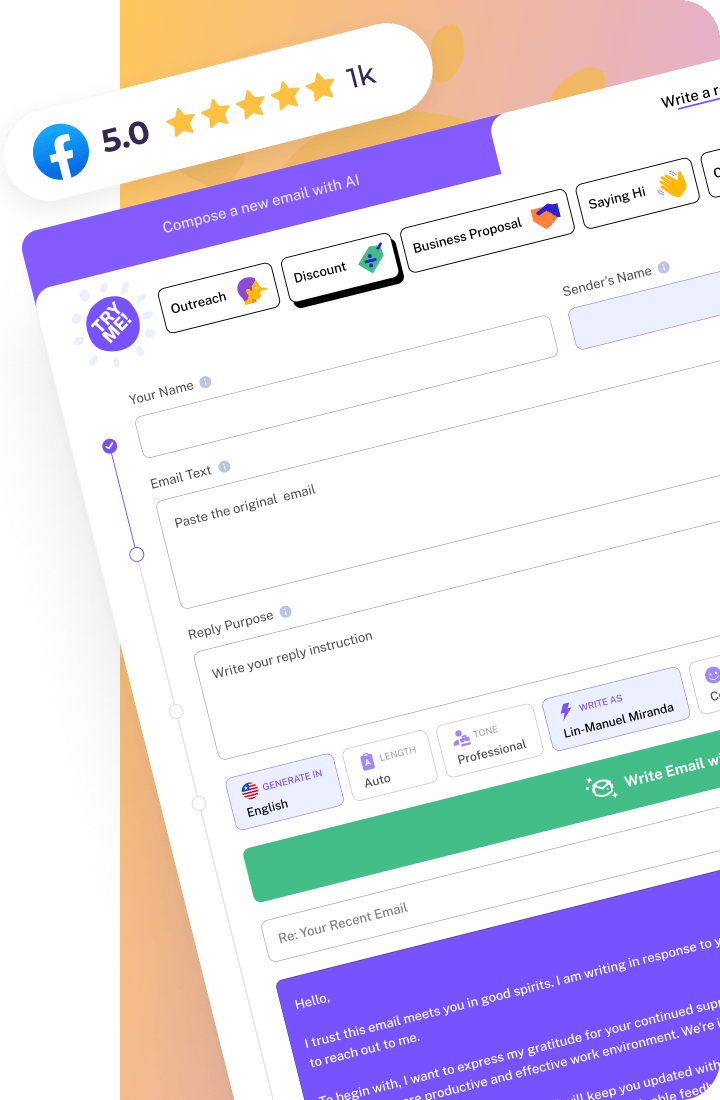
WriteMail.AI simplifies the process of crafting formal emails by suggesting appropriate language and structure tailored to your specific needs. Its smart algorithms help ensure your communication strikes the right tone, enabling you to maintain professionalism and clarity effortlessly.