
“Best regards” is a polite and universally accepted closing often used in professional emails. It’s a versatile sign-off that suits most formal and semi-formal communications, helping you end your message on a positive note.
When and How to Use “Best regards” in Your Emails
The “Best regards” closing is a safe choice for professional emails. It’s particularly useful when you’re contacting someone for the first time or maintaining a formal tone with clients, colleagues, or superiors. Unlike casual closings like “Cheers” or “Take care,” “Best regards” exudes professionalism and respect, ensuring you come across as courteous and considerate.
On the flip side, overusing “Best regards” could make your emails sound generic or impersonal. For more personal interactions or emails where you’ve established a rapport, consider injecting a bit more warmth into your sign-offs, like “Kind regards” or simply “Regards.” This subtle shift can make your communication feel less robotic, without sacrificing professionalism.
One common mistake is mixing overly casual language in your email body with a formal closing like “Best regards.” Keep your tone consistent to avoid sending mixed signals. If your email is straightforward and professional, “Best regards” is a perfect fit. If you’ve had a more relaxed back-and-forth, adapt your closing to match.
Email Examples
In this example, you’re emailing a prospective client after a meeting to discuss potential collaboration.
This example shows how “Best regards” can wrap up a detailed project update you’re sending to a team leader.
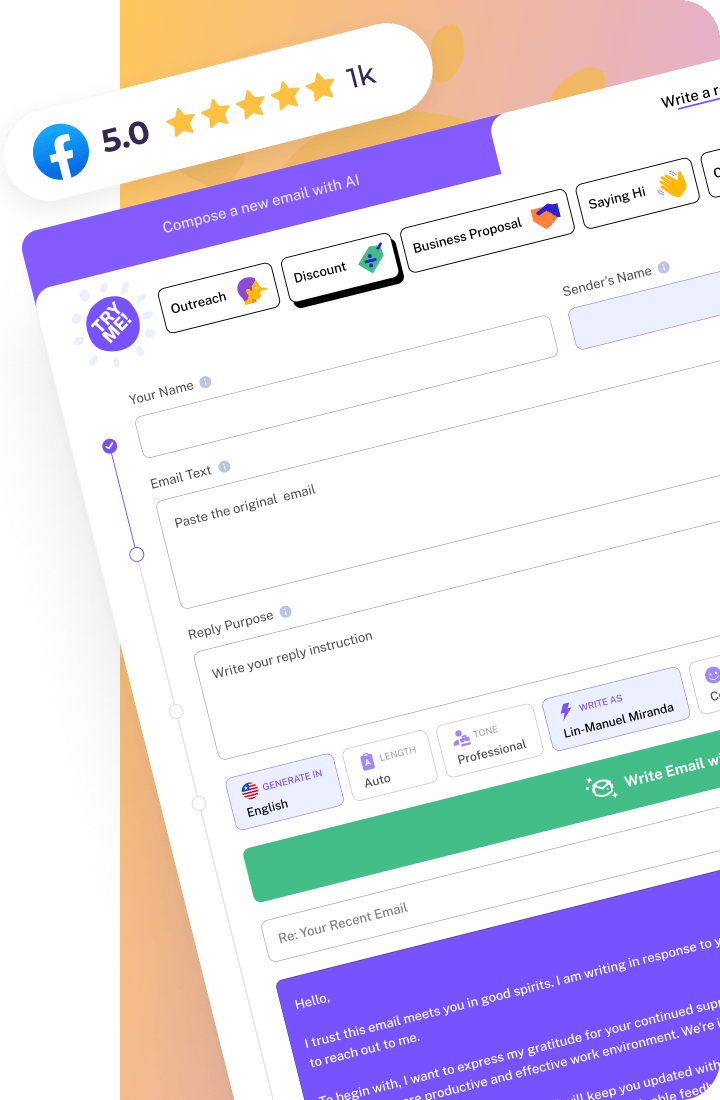
How WriteMail.AI Helps You With Best regards email
WriteMail.AI streamlines your email writing process, ensuring your sign-offs are always fitting and professional. By analyzing the context of your email, it suggests the most appropriate closing, saving you time and ensuring consistency in tone.