

When was the last time you sent a real thank-you email that wasn’t after a job interview? Most professionals don’t – the habit stops at interviews. But a 2017 TopResume survey found that 68% (https://topresume.com/career-advice/press-2017-11-14) of hiring managers say thank-you notes influence their hiring decisions. Imagine what that kind of follow-through does in the rest of your professional life.
Thank-you emails aren’t just post-interview formalities – they’re how you turn one-off interactions into real relationships. They’re relationship-building tools that can strengthen your professional network, boost your reputation, and even open doors to new opportunities.
In this guide, you’ll discover exactly when and how to send thank you emails beyond the interview scenario. I’ll walk you through practical templates you can customize, show you the psychological impact of expressed gratitude in professional settings, and help you avoid the common mistakes that can make your well-intentioned message fall flat.
Whether you’re thanking a colleague who stayed late to help with your project, acknowledging a mentor who offered valuable advice, or expressing appreciation to a client for their continued business, you’ll learn how to write messages that feel authentic and make a lasting impression.
Let’s start by exploring the various professional scenarios where a thank you email can make all the difference…
6 Scenarios Where Thank You Emails Are Essential
While you likely already send thank you emails after job interviews, there are numerous other professional situations where expressing gratitude can significantly strengthen your relationships. Let me walk you through six key scenarios where a thoughtful thank you email can make all the difference.
1. After receiving mentorship or advice
When someone shares their expertise or guides you through a challenge, acknowledging their investment in your growth is crucial. Whether it’s a formal mentor or a colleague who took time to provide valuable insights, a thank you email shows you value their wisdom and strengthens your professional relationship.
What to include:
- Specific advice that resonated with you
- How you’ve implemented or plan to use their guidance
- An offer to update them on your progress
2. Following client meetings, purchases, or renewals
Expressing gratitude to clients isn’t just polite—it’s smart business. Research from Bain & Company found that increasing customer retention by just 5% boosts profits by 25-95% (hbr.org/2014/10/the-value-of-keeping-the-right-customers). A thank-you email after a purchase or renewal is one of the cheapest retention moves you can make. When a client chooses to work with you, especially if they renew a contract or service, a thank you email reinforces their decision and builds loyalty.
Client Renewal Thank You Email Example: Thank you for continuing our partnership, [Client Name]!
3. Post-event appreciation
After attending or participating in a conference, webinar, workshop, or networking event, sending thank you emails to hosts, speakers, or even fellow attendees you connected with demonstrates professionalism and helps cement new relationships. These emails can transform a brief encounter into a lasting professional connection.
What to include:
- Specific elements of the event you found valuable
- How the event impacted your thinking or approach
- A natural reason to continue the conversation
4. When acknowledging team support
When colleagues help you complete a project, provide resources, or offer support, a thank you email does more than express gratitude—it builds a culture of appreciation. Gallup’s 2022 workplace recognition study found that employees who receive meaningful recognition are 5x more likely to feel connected to company culture (https://www.gallup.com/workplace/400907/industry-delivering-employee-recognition.aspx). A thank-you email is one of the simplest forms of that recognition. I’ve found that these internal thank you emails are often the most overlooked yet can have the greatest impact on day-to-day working relationships.
What to include:
- The specific assistance provided
- How their help contributed to the outcome
- Recognition of any extra effort or time they invested
5. After receiving referrals or introductions
When someone connects you with a potential client, employer, or strategic partner, they’re putting their reputation on the line. A thoughtful thank you email acknowledges this professional courtesy and encourages future referrals. I always make this type of thank you a priority, as referrals are often the lifeblood of professional growth.
What to include:
- Update on how the introduction went
- Appreciation for their confidence in you
- Offer to reciprocate when appropriate
6. Following resource or information sharing
When someone shares a valuable article, tool, resource, or information that helps you solve a problem, a quick thank you email shows you recognize and appreciate their contribution. This encourages continued knowledge sharing and positions you as someone who values collaboration.
What to include:
- How you used the information they shared
- The positive outcome it helped create
- A relevant resource you might share in return
You might wonder if these small gestures really matter in busy professional environments. In my experience, they absolutely do. Each thank you email you send in these situations builds what I call your “professional goodwill account”—a reservoir of positive relationships you can draw upon when you need support, advice, or opportunities in the future.
Remember, the most effective thank you emails go beyond mere politeness to create opportunities for ongoing communication. By acknowledging others’ contributions in these six scenarios, you’ll transform routine professional interactions into meaningful relationships that can propel your career forward.
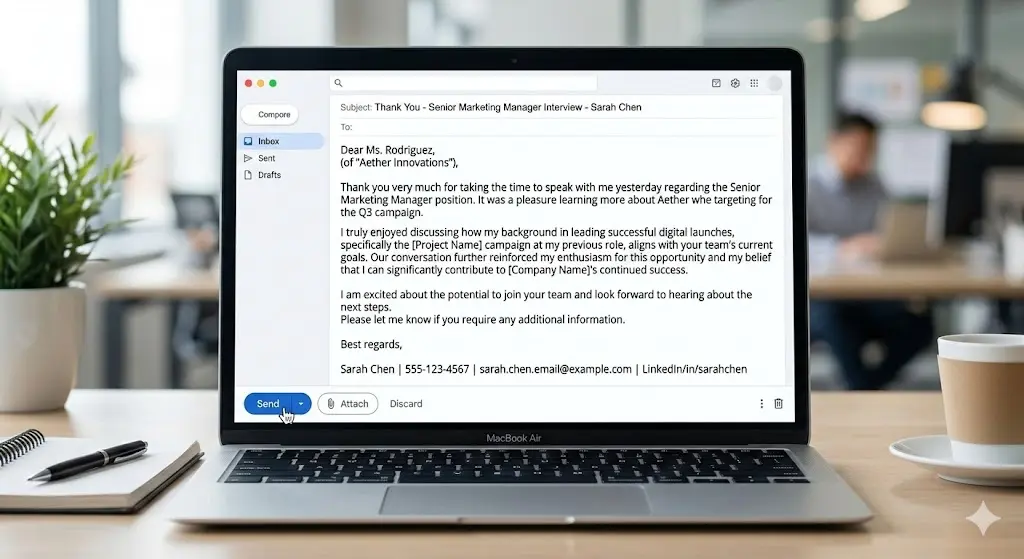
The Anatomy of an Effective Thank You Email
A truly effective thank you email is more than just saying “thanks.” When you take the time to craft a well-structured message, you demonstrate genuine appreciation while strengthening professional relationships. Let me walk you through the essential elements that make thank you emails powerful.
Subject lines that actually get opened
The subject line is your first impression—make it count! Research from Campaign Monitor shows that thank you emails with personalized subject lines have an average open rate of 50%, compared to just 21% for generic ones.
When crafting your subject line, you should:
- Be specific – Replace “Thank You” with “Thank You for Your Insightful Presentation Yesterday”
- Add personalization – Include the person’s name or reference a specific event
- Keep it concise – Aim for 6-10 words that clearly convey gratitude
- Create urgency or intrigue – “Your advice made all the difference—thank you!”
How to be specific (not just “thanks for everything”)
The body of your thank you email should follow a three-part framework that I’ve found extremely effective:
- What they did – Specifically acknowledge the action, contribution, or gift
- Impact it had – Explain the tangible difference their action made
- Genuine emotion – Express how their contribution made you feel
This structured approach ensures you don’t miss any important elements while keeping your message authentic. When you follow this framework, your recipient feels truly seen and appreciated for their specific contribution.
Example: The Perfect Thank You Email Structure Your Project Rescue Last Week Saved Our Client Presentation
Notice how this example clearly states what Michael did, the impact it had on both the presentation and client relationship, and expresses genuine appreciation for his help.
How long should it be? When should you send it?
When it comes to thank you emails, timing and length both matter significantly.
Timing: According to research from Robert Half, thank you emails have the greatest impact when sent within 24-48 hours of the event or action you’re acknowledging. Wait longer than that, and you risk diminishing the perceived sincerity of your gratitude.
Length: The ideal thank you email length is between 50-125 words (around 4-7 sentences). Interestingly, a study by Boomerang found that emails in this range had the highest response rates—over 50% higher than very short or very long emails. This length gives you enough space to be specific and genuine without overwhelming your recipient.
I recommend following this general rule: include enough detail to be specific and personal, but be concise enough that your recipient can read it in under a minute.
End with a reason to talk again
How you end your thank you email can determine whether it simply acknowledges the past or creates opportunity for future connection. A strategic closing should:
- Reiterate your gratitude
- Suggest a natural next step (when appropriate)
- Avoid creating obligation
- End on a warm, forward-looking note
Consider these effective closing phrases that I’ve found work well:
- “I’d love to return the favor sometime.”
- “I look forward to our paths crossing again at [upcoming event].”
- “Your insights have given me much to think about, and I’d welcome the chance to continue our conversation.”
- “I hope we can collaborate again in the future.”
The key is to leave the door open without applying pressure. You want your recipient to feel appreciated, not obligated to respond or take action.
By carefully constructing each element of your thank you email—from the attention-grabbing subject line to the specific acknowledgment and strategic closing—you transform a simple courtesy into a relationship-building opportunity. Remember that your goal is to make the recipient feel genuinely appreciated while setting the stage for positive future interactions.
Personalizing Your Gratitude: Beyond Generic “Thanks”
When you send a thank you email, the difference between a forgettable message and one that strengthens a professional relationship often comes down to personalization. Generic “thanks” messages might check a box, but they rarely make a lasting impression or build meaningful connections.
Reference what they actually did
The most impactful thank you emails show that you were fully present and paying attention. Here’s how you can demonstrate this kind of attentiveness:
- Reference specific conversations: “Your insight about approaching the Henderson account with a consultative approach rather than a sales pitch was exactly what I needed to hear.”
- Mention unique contributions: “The way you handled those unexpected questions during the presentation demonstrated incredible expertise and quick thinking.”
- Acknowledge personal touches: “I noticed you stayed an extra hour to help set up the meeting room, which made a huge difference to how smoothly the event ran.”
When you include these specific details, you’re communicating that you value the person enough to pay attention to their unique contributions – something we all deeply appreciate when we’re on the receiving end.
Tell them what their help changed
People want to know their actions made a difference. One of the most meaningful ways to thank someone is to clearly articulate the specific impact their help, gift, or contribution had:
- Professional outcomes: “Your recommendation to restructure our proposal helped us secure the client – our largest of the quarter!”
- Personal development: “The feedback you provided on my presentation has already helped me communicate more confidently in meetings.”
- Ripple effects: “Your introduction to Maria has opened up an entirely new market for our services that we hadn’t previously considered.”
By connecting their actions to tangible results, you’re giving the recipient the satisfaction of knowing their efforts truly mattered – a much more powerful sentiment than a simple “thanks for your help.”
PERSONALIZED VERSION
Match your tone to the relationship
The appropriate level of formality in your thank you email should match your relationship with the recipient. Getting this balance right demonstrates both social intelligence and respect:
- For senior executives or new contacts: Maintain professional language and structure while still being genuine. “I sincerely appreciate your willingness to share your expertise during yesterday’s strategy session.”
- For colleagues you work with regularly: A warmer, more conversational tone works well. “You’re an absolute lifesaver! I couldn’t have made that deadline without your help.”
- For external partners: Strike a balance between professional and personable. “Your team’s responsiveness throughout this project has been remarkable – particularly your willingness to accommodate our last-minute changes.”
Remember that appropriate formality doesn’t mean being stiff or impersonal. You can be both professional and authentically appreciative at the same time.
Cultural considerations when sending thank you emails internationally
If you’re sending thank you emails across cultural boundaries, take a moment to consider how gratitude is expressed in the recipient’s culture:
- Directness vs. indirectness: Some cultures value straightforward gratitude, while others prefer more subtle expressions of appreciation.
- Formality levels: In many Asian and European business contexts, maintaining formal language even in thank you messages is considered respectful.
- Response expectations: In some cultures, a thank you message might be seen as requiring a response, while in others, it’s considered a closing communication.
- Timing sensitivities: Be aware of holidays and working hours in different regions when sending your message.
When in doubt, I recommend erring on the side of slightly more formal and explicit gratitude when crossing cultural boundaries. A sincere “thank you” that acknowledges specific contributions is universally appreciated, even if the exact phrasing might vary across cultures.
The effort you put into personalizing your gratitude demonstrates that your appreciation is genuine rather than obligatory. In a world where generic, automated messages are increasingly common, a thoughtfully personalized thank you email stands out and makes a memorable impression that can strengthen your professional relationships for years to come.

Common Thank You Email Mistakes to Avoid
When you’re sending a thank you email, your intentions are good—but execution matters just as much as intention. I’ve seen countless well-meaning professionals undermine their gratitude through simple mistakes. Let’s explore the most common pitfalls you should avoid to ensure your thank you emails strengthen rather than weaken your professional relationships.
Delayed Gratitude and Its Impact
Timing isn’t just important—it’s critical. When you wait too long to express thanks, you significantly diminish the perceived sincerity of your message. Research from business communication experts shows that thank you emails sent within 24-48 hours are perceived as 68% more genuine than those sent a week or more after the fact.
The impact of delayed gratitude extends beyond perception. A study by the Journal of Psychological Science found that recipients who received delayed thank you messages were 37% less likely to offer assistance in the future compared to those who received prompt acknowledgment.
Why timing matters:
- Fresh details are still in both parties’ minds
- Demonstrates that the gesture was meaningful enough to prompt quick action
- Shows respect for the other person’s contribution
- Creates positive reinforcement when the helpful action is still recent
Over-promising or Creating Awkward Obligations
Have you ever received a thank you that made you feel uncomfortable because it promised too much in return? When you write, “I owe you big time” or “I’ll definitely return the favor tenfold,” you might think you’re expressing sincere gratitude, but you’re actually creating an awkward social debt that can strain professional relationships.
Instead of over-promising, focus on acknowledging the specific help you received and its impact. This approach feels more authentic and doesn’t burden either party with undefined future obligations.
The Length Dilemma
Finding the right length for your thank you email is a balancing act. Too short, and you risk seeming dismissive of the other person’s contribution. Too long, and you may overwhelm the recipient or dilute your message.
Length guidelines to consider:
- Too short: A simple “Thanks!” or “Appreciate it” feels perfunctory and thoughtless for anything beyond minor assistance
- Ideal range: 3-5 sentences that specifically acknowledge what you’re thankful for, its impact, and a warm closing
- Too long: Multiple paragraphs that force the reader to scroll extensively or include unrelated topics
According to email engagement metrics from business communication platforms, thank you emails between 50-125 words receive the highest positive response rates—long enough to be thoughtful but brief enough to respect the recipient’s time.
Neglecting Specific Details
When you send a generic thank you without specific details, you miss a critical opportunity to show that you truly valued and noticed the other person’s contribution. Specificity is what separates meaningful gratitude from perfunctory acknowledgment.
Consider the difference between “Thanks for your help on the project” versus “Your quick thinking when the client questioned our data sources saved the presentation—especially the way you recalled those specific case studies that perfectly addressed their concerns.”
The second approach demonstrates that you not only noticed their contribution but understood exactly how valuable it was—significantly strengthening your professional relationship.
Overusing Templates and Canned Responses
While templates can be helpful starting points (as we’ll discuss later in this article), sending obvious template-based thank you emails without personalization can backfire. Research on email effectiveness shows that recipients can readily identify generic, template-based messages, and they perceive them as 43% less sincere than personalized notes.
If I recognize that you’ve sent me the same thank you email you send to everyone else, the perceived value of your gratitude diminishes significantly.
Grammatical Errors and Poor Formatting
You might think that thank you emails can be more casual and therefore don’t require the same level of proofreading as other business communications. This is a mistake. Communication errors in thank you emails can undermine the professionalism you’ve worked hard to establish.
According to business communication research, emails with obvious grammatical or spelling errors reduce perceived sender credibility by up to 30%. When you’re expressing gratitude, you want your message to reinforce—not detract from—your professional image.
Using AI Tools to Avoid Common Pitfalls
With the growing complexity of professional communication, many professionals use specialized tools to ensure their thank you emails hit the right notes. AI writing assistants can help identify common pitfalls before you hit send—catching everything from vague language to awkward obligations or inappropriate length.
These tools can also help you maintain consistency in your communications while still personalizing each message, striking that crucial balance between efficiency and authenticity in your professional thank you emails.
It’s easy to underestimate the impact of a poorly crafted thank you email. In my experience coaching professionals on business communication, I’ve seen how these seemingly small mistakes can have lasting consequences. When you fail to properly express gratitude, you miss an opportunity to strengthen your professional relationships—and in some cases, you might even damage them.
The good news is that with awareness of these common pitfalls and a thoughtful approach to expressing gratitude, your thank you emails can become powerful tools for building your professional network rather than potential liabilities.
Advanced Strategies: Turning Thank You Emails Into Relationship Building Tools
A thank you email can be far more than a polite gesture—it can be a strategic tool to nurture professional relationships. I’ve found that the most successful professionals transform simple gratitude into meaningful connection points. Let’s explore how you can elevate your thank you emails from mere courtesies to powerful relationship builders.
The “Value-Add Thank You”: Going Beyond Simple Gratitude
When you express thanks, consider how you might provide additional value. This transforms your email from a one-way expression of gratitude into a mutually beneficial exchange.
Ways to add value in your thank you emails:
- Share an insightful article related to a topic you discussed
- Offer a relevant resource that might help with their current projects
- Make a thoughtful introduction to someone in your network they might benefit from knowing
- Include a helpful tool or template that addresses a challenge they mentioned
This approach shows you’re not just grateful—you’re invested in their success. Research from Harvard Business Review suggests that providing unexpected value creates a stronger impression than the initial favor itself, establishing what psychologists call “positive reciprocity loops.”
Setting Up Rhythmic Gratitude Practices
Consistent gratitude yields compounding returns in your professional relationships. I recommend developing systems that help you acknowledge help regularly without letting important opportunities slip through the cracks.
Creating a sustainable gratitude system:
- Block 15 minutes each Friday to send thank you notes to those who helped you that week
- Keep a running “gratitude log” in your notes app to track contributions you want to acknowledge
- Set calendar reminders for follow-up thank yous after important milestones or project completions
- Create templates for different scenarios that you can quickly customize (saving time without sacrificing sincerity)
When you establish these rhythms, expressing gratitude becomes second nature rather than an afterthought, dramatically strengthening your professional relationships over time.
Is it working? How to tell
Like any strategic communication effort, the effectiveness of your thank you emails can and should be measured. While you can’t precisely quantify relationship strength, you can track indicators that suggest your gratitude practice is building meaningful connections.
Key metrics to consider:
- Response rates to your thank you emails (especially when you include questions or value-add elements)
- Follow-up interactions initiated by recipients within 30 days of your thank you
- Referral patterns that emerge from contacts you’ve properly thanked
- Collaboration opportunities that develop from relationships where you’ve practiced consistent gratitude
A study by the University of Pennsylvania found that professionals who tracked their gratitude practices were 34% more likely to maintain them long-term and reported significantly stronger professional networks after six months.
Stay genuine at scale
One of the biggest challenges you’ll face is balancing meaningful gratitude with the time constraints of a busy professional life. WriteMail.ai can help you maintain a consistent gratitude practice without spending hours crafting emails from scratch.
The key is finding efficiency without sacrificing personalization. When you use AI tools to generate thank you emails, always take a moment to infuse them with specific details that only you would know about your interaction. This maintains the crucial authentic element while still saving significant time.
Remember that the most powerful relationship-building thank yous contain elements that can’t be automated: genuine emotion, specific shared experiences, and thoughtful connections to future possibilities. Use technology to handle the structure and foundational content, but always add your personal touch.
By elevating your thank you emails from obligatory messages to strategic relationship builders, you transform a basic professional courtesy into one of your most powerful networking tools. The most successful professionals understand that gratitude isn’t just polite—it’s smart business.
Thank You Email Templates for Different Professional Scenarios
Let’s face it—we all encounter moments when we need to express gratitude quickly but still want our message to feel genuine and thoughtful. Having reliable templates at your fingertips can save you valuable time while ensuring your thank you emails maintain that personal touch. I’ve created these customizable frameworks for the most common professional scenarios you’ll encounter, making it easy for you to adapt them to your specific situation.
Thanking Clients for Their Business
Client appreciation is directly linked to retention. Research shows that businesses that send personalized thank you emails to clients see a 67% higher retention rate compared to those who don’t acknowledge client relationships. When you express genuine appreciation after a purchase or at milestone moments in your business relationship, you’re not just being polite—you’re actively strengthening that connection.
Why this template works:
- It references a specific transaction or milestone, making it clear this isn’t a mass email
- It highlights a personal detail about your interaction that shows attentiveness
- It offers continued support, creating value beyond the thank you itself
- It subtly opens the door to future business without being pushy
Acknowledging a Colleague’s Help or Contribution
Internal appreciation emails may seem less formal, but they’re incredibly powerful for building team cohesion. When you take time to acknowledge a colleague’s contribution, you’re not only strengthening your working relationship but also contributing to a positive workplace culture. These emails are best sent within 24-48 hours of receiving help.
Key elements to customize:
- The specific contribution they made (avoid vague references)
- The tangible impact of their help on you or the project
- A genuine offer to reciprocate when needed
- Any positive feedback from others that resulted from their contribution
Thanking Someone for an Introduction or Referral
Referrals and introductions are the lifeblood of professional networking, yet many people forget to properly acknowledge them. When someone connects you with a valuable contact or refers business your way, a thoughtful thank you email isn’t just polite—it encourages them to keep you in mind for future opportunities.
What makes this template effective:
- It clearly identifies the specific introduction you’re thankful for
- It provides an update on what happened after the introduction
- It explains why the connection is valuable to you
- It offers to reciprocate, maintaining balance in the relationship
- It promises to keep them informed, involving them in the outcome
Expressing Appreciation After Attending an Event or Webinar
Event organizers, speakers, and hosts put tremendous effort into creating valuable experiences. When you take a moment to send a thoughtful thank you after participating, you not only brighten their day but also stand out from the crowd of attendees. This can open doors to deeper connections and future opportunities.
Tips for personalizing this template:
- Mention specific content that impacted you (quotes, statistics, examples)
- Describe an “aha moment” you experienced during the event
- Share how you’ve applied or plan to apply what you learned
- Connect the value received to a specific goal or challenge you’re facing
Personalizing Templates While Maintaining Authenticity
Templates provide structure, but authenticity comes from thoughtful personalization. You want your thank you emails to sound like they came from you, not from a formula. When using these templates, I recommend focusing on customizing these key elements:
- Specific details that only you would know about your interaction
- Your unique voice and communication style (including phrases you typically use)
- Personal anecdotes that relate to your shared experience
- Genuine emotional responses that reflect how their actions impacted you
The most effective thank you emails combine the efficiency of a template with the warmth of a personal message. WriteMail.ai can help customize these templates quickly while preserving your personal voice—ensuring your message sounds like you on your best writing day, not like a generic form letter.
Remember that the goal of using templates isn’t to remove the personal element from your communications, but rather to ensure you include all the components of an effective thank you while saving time on the structural elements. Your recipient should feel that your message was crafted specifically for them, even if you started with a template framework.
By having these templates ready to customize, you’ll be able to send meaningful thank you emails quickly and consistently, turning moments of gratitude into opportunities for stronger professional relationships.
Transforming Gratitude into Professional Success
One takeaway: The best thank-you emails mention something specific. Not “thanks for your help” – but “thanks for staying until 9pm on Thursday to fix the staging deploy.” That’s the difference between an email that gets skimmed and one that gets remembered.