



Deciding to leave your job is tough enough—figuring out how to communicate that decision shouldn’t add to your stress. If you’re staring at a blank screen trying to craft the perfect resignation email, you’re not alone. According to Zippia’s labor market data, the average person changes jobs 12 times throughout their career – which means most of us will write at least a few resignation emails whether we like it or not.
In my experience writing and reviewing resignation emails, even senior leaders overthink the tone. They’ll spend an hour on a three-sentence email because they’re worried about burning a bridge they might need in two years. You want to be professional yet authentic, brief but thorough, and most importantly—you want to preserve relationships you’ve worked hard to build.
When you write your resignation email, you’re creating a permanent record of your departure. This document will likely be forwarded to HR, stored in your employee file, and could impact future references. That’s why getting it right matters more than you might think.
In this guide, I’ll walk you through exactly what to include in your resignation email, what to leave out, and how to maintain professional bridges even as you’re preparing to cross them. You’ll find practical advice on timing, structure, and tone, along with five customizable templates you can adapt to your specific situation—whether you’re leaving on perfect terms or under more complicated circumstances.
By the time you finish reading, you’ll have everything you need to write a resignation email that maintains your professional reputation and sets you up for a smooth transition. Let’s make sure your final professional communication at this job is as impressive as your first.
Essential Elements of an Effective Resignation Email
Every resignation email needs five things. Miss one, and you create confusion. Add too much, and you sound like you’re apologizing for leaving. Here’s the checklist:
Clear Statement of Resignation
Lead with the news. First sentence, first paragraph: “I’m writing to resign from my position as [title], effective [date].” Don’t bury it after two paragraphs of gratitude – your manager shouldn’t have to scroll to figure out why you’re emailing.
When you specify your last day, be precise with the exact date to avoid any confusion. For example, write “My last day will be Friday, May 15, 2023” rather than vaguely stating “in two weeks.”
Expression of Gratitude
Say thank you – even if you have to dig for something genuine. Not because it’s the polite thing to do, but because your manager will read this email and decide how helpful they’ll be as a reference. One specific thing you appreciated lands harder than three paragraphs of vague gratitude.
I always advise my clients to include at least one specific example of something valuable they gained from their experience. This personal touch shows thoughtfulness and sincerity in your communication.
Sample Resignation Email Template Resignation – Alex Johnson
Brief Explanation for Leaving (Optional)
While you’re not obligated to explain why you’re leaving, providing a brief, professional reason can often be appreciated by employers. If you’re comfortable sharing, keep this explanation positive and forward-focused. For instance, you might mention pursuing new career growth opportunities, furthering your education, or relocating to a new city.
What you should avoid is using this section to vent frustrations or criticize the company, management, or colleagues. Remember, how you leave is often what people remember most about your tenure. When in doubt, I suggest keeping your explanation simple and positive.
Offer to Assist with Transition
One of the most appreciated elements of a resignation email is your offer to help with the transition. This demonstrates professionalism and consideration for the team you’re leaving behind. You might offer to:
- Train your replacement
- Document your current projects and processes
- Finish important pending work
- Be available for questions after your departure (if you’re comfortable with this)
By explicitly stating your willingness to ensure a smooth handover, you show that you’re committed to leaving on good terms and maintaining your professional reputation. In my experience, this single element can significantly impact how your departure is perceived by management.

Professional Closing
Finally, end your email with a professional closing that reiterates your appreciation and maintains a positive tone. A simple “Thank you” or “Sincerely” followed by your full name and current position is appropriate. If you plan to stay in touch, you might also include your personal contact information.
When you include all these elements in your resignation email, you create a comprehensive, professional communication that sets the tone for a smooth departure. Remember that this email often becomes part of your permanent employment record, so taking the time to craft it carefully is well worth the effort.
With these essential components in place, your resignation email will serve as an effective first step in your professional transition while helping to preserve valuable relationships for your future career path.
Step-by-Step Guide to Writing Your Resignation Email
You don’t need to write the perfect email. You need to write a clear one. Here’s how, step by step – from the subject line to what you do after you hit send. Let me walk you through the process.
Crafting an Appropriate Subject Line
Your subject line should be direct and professional. I recommend keeping it simple with something like “Resignation – [Your Name]” or “Notice of Resignation – [Your Name].” This immediately communicates the purpose of your email and helps your manager prioritize it appropriately. Avoid vague subject lines like “Important News” or “Quick Update” as these may not convey the urgency of your message.
Opening Paragraph: State Your Resignation Clearly
Begin your email by clearly stating your intention to resign and your intended last day of employment. This isn’t the place to be vague or beat around the bush. A direct statement shows professionalism and consideration for your employer’s need to plan accordingly.
For example, you might write: “I am writing to formally notify you of my resignation from my position as [Your Position] at [Company Name]. My last day will be [Date, typically two weeks from the notification date].”
Middle Paragraph: Express Appreciation
Even if you’re leaving due to challenging circumstances, expressing gratitude for positive aspects of your experience demonstrates maturity and professionalism. Think about what you’ve learned, the opportunities you’ve had, or the relationships you’ve built.
You might say: “I am grateful for the opportunities for professional growth and development that you have provided during my time at [Company Name]. The experience and skills I’ve gained here have been invaluable to my career development.”
Closing Paragraph: Offer Transition Assistance
Offering to help with the transition shows that you care about the company’s continued success even after your departure. This could include training your replacement, documenting your processes, or finishing key projects before you leave.
For example: “I am committed to ensuring a smooth transition during my remaining time here. Please let me know how I can best assist in transferring my responsibilities and knowledge before my departure.”
Complete Resignation Email Example: Resignation – Sarah Johnson
Polishing Your Tone and Language
Match the tone of a good Monday morning standup: warm, direct, no drama. If your manager read it out loud to the team, you’d want it to sound respectful – not robotic, not emotional, not apologetic. When you’re writing your email, I recommend reading it aloud to yourself to check how it sounds. Ask yourself: “Would I be comfortable if this email was shared with others in my industry?”
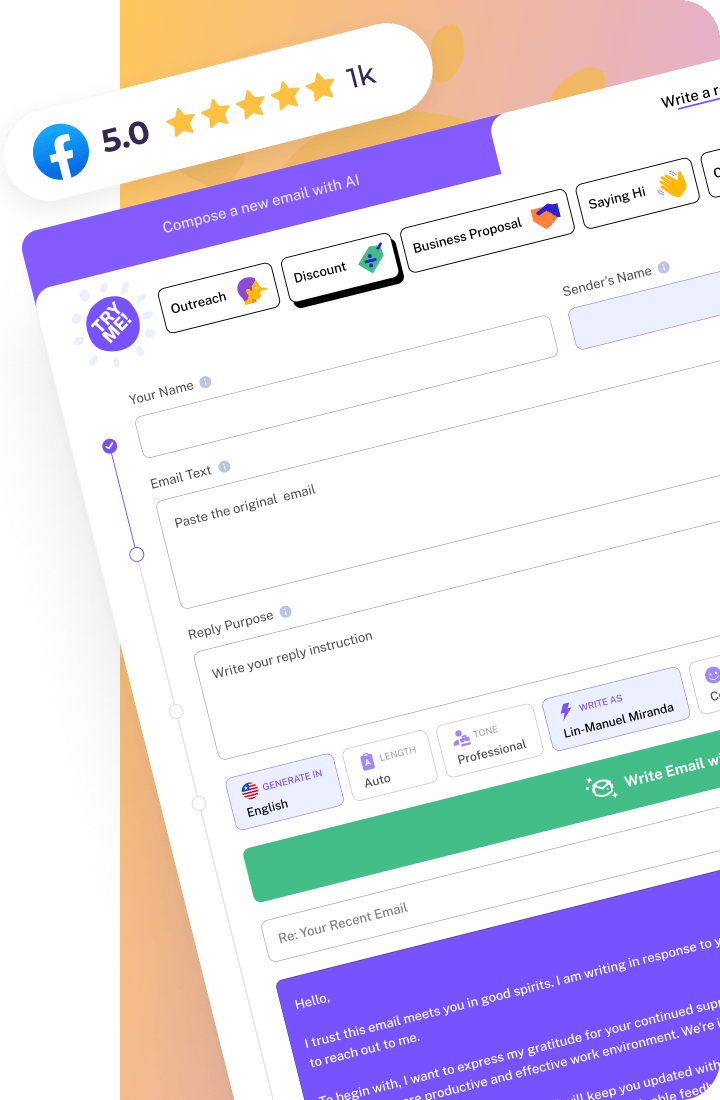
Tools like WriteMail.ai can be particularly helpful here, as they’re designed to help generate professionally structured resignation emails with appropriate tone settings. The platform’s tone analysis can ensure your message maintains professionalism even if you’re feeling emotional about your departure.
Timing Your Email Properly
Send it Monday or Tuesday morning, before lunch. Why? Your manager has the whole week to process it, schedule a conversation, and start thinking about transition – instead of stewing over the weekend.
If possible, schedule a brief meeting with your manager before sending the email, so they hear the news directly from you first. You can then follow up with the formal email immediately after your conversation.
Preparing for the Follow-Up
After sending your resignation email, you should be prepared for various responses. Your manager might request a meeting to discuss your decision, ask about your reasons for leaving, or even present a counter-offer.
Before sending your email, I recommend you prepare mentally for these scenarios. Know your boundaries about what information you’re willing to share regarding your next steps, and be clear about whether you would consider a counter-offer.
Remember that how you handle this process will likely be the lasting impression you leave with your current employer. A thoughtful, professional resignation email sets the stage for a smooth transition and preserves valuable professional relationships that may benefit you in the future.
By following these steps, you’ll create a resignation email that clearly communicates your intentions while maintaining professional relationships and your reputation in your industry.
Customizing Your Resignation Email for Different Scenarios
Not all resignation situations are created equal. While the standard two-week notice works in many cases, you’ll often need to customize your approach based on specific circumstances. I’ve found that tailoring your resignation email to your unique situation demonstrates professionalism and consideration—qualities that will serve you well as you transition to your next opportunity.
Resignation with Short Notice
Sometimes, life circumstances make it impossible to provide the standard two-week notice. When you’re in this situation, honesty and a helpful attitude are your best approach.
Key elements to include:
- An immediate acknowledgment of the shortened timeline
- A brief, professional explanation for the condensed notice period
- An enhanced transition plan that offers specific ways to minimize disruption
- A sincere apology for any inconvenience
Remember, while providing short notice isn’t ideal, how you handle it can still preserve your professional relationships. Offering extended availability for questions after your departure or creating detailed documentation can help offset the shortened timeline.
Resignation After a Short Employment Period
Leaving after just a few months can be awkward, but it happens more frequently than you might think. When you need to resign from a position you’ve only recently started, focus on expressing gratitude while being honest but tactful.
Approach recommendations:
- Be appreciative of the opportunity, regardless of how brief
- Provide a concise, honest reason for your departure without oversharing
- Acknowledge the investment the company made in hiring and training you
- Offer specific ways to minimize disruption during the transition
I’ve found that when you approach this delicate situation with genuine appreciation and a willingness to ease the transition, most employers will respect your decision—even if they’re disappointed.
Example: Resignation When Leaving for a Competitor Resignation – Sarah Johnson
Notice how Sarah acknowledges she’s moving to a competitor but emphasizes her ethical commitment to confidentiality. She focuses on gratitude and offers specific transition assistance, maintaining professionalism throughout.
Resignation During Challenging Circumstances
When you’re leaving due to conflict with management, a toxic work environment, or other difficult circumstances, you might be tempted to express frustration in your resignation email. I strongly advise against this approach. Your resignation email will become part of your employment record and could influence future references.
Best practices:
- Keep your email brief and neutral in tone
- Omit specific complaints or criticisms (save these for an exit interview, if appropriate)
- Focus on forward-looking language rather than past problems
- Include only factual information about your departure
- If possible, identify one positive aspect of your experience to acknowledge
Even in the most challenging situations, I’ve seen professionals maintain their dignity by keeping resignation communications professional—and they’re almost always glad they did.
Using AI Writing Assistants for Your Specific Situation
If you’re stuck on wording – especially for a tricky scenario like short notice or bad terms – an AI writing tool like WriteMail.ai can generate a first draft with the right tone. But don’t send the AI version as-is. Add one specific detail about your experience and cut anything that doesn’t sound like you. The structure should come from the tool; the voice should come from you.
Remember, regardless of your resignation circumstances, your goal should be to leave doors open and relationships intact. The professional world is surprisingly small, and maintaining connections is almost always in your best interest as you move forward in your career.
Professional Templates for Common Resignation Situations
Five templates below, covering the most common resignation scenarios. Copy the one that fits, swap the bracketed details for your own, and adjust anything that doesn’t sound like you. None of these need to be longer than 150 words.
Standard Two-Week Notice Resignation Template
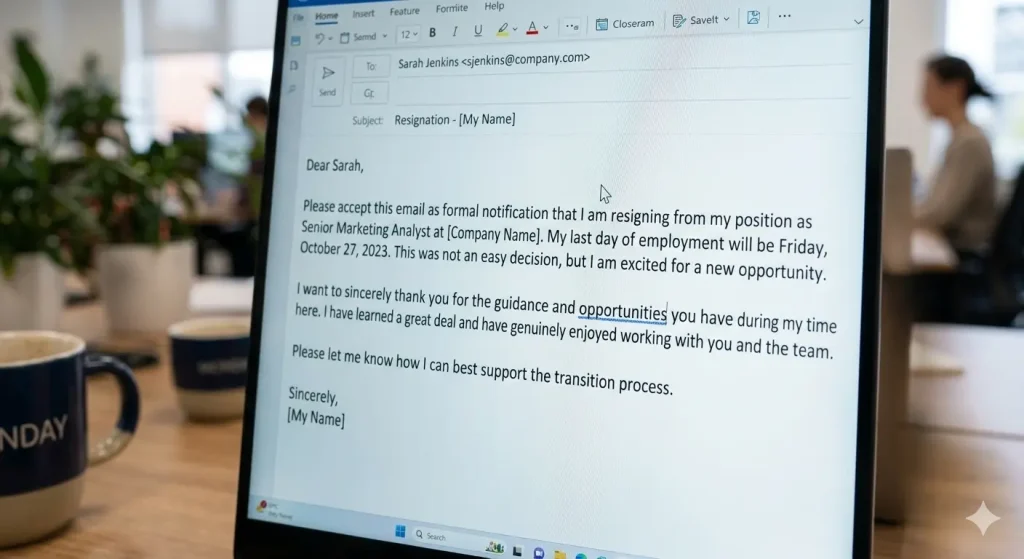
The standard two-week notice template is your go-to option for most resignation situations. It provides adequate transition time while maintaining professional courtesy. Here’s a template you can adapt:
Standard Two-Week Notice Template Resignation – [Your Name]
Resignation with Extended Transition Period Template
When your role involves complex responsibilities or if you’re in a leadership position, you might want to offer a longer notice period. This demonstrates your commitment to a smooth handover and maintains goodwill.
Extended Transition Period Template Resignation and Transition Plan – [Your Name]
Resignation to Pursue Education or Career Change
When you’re leaving to pursue further education or change career paths entirely, being transparent about your reasons can help maintain positive relationships. This type of resignation is usually well-received as it’s viewed as personal development rather than dissatisfaction.
Education/Career Change Template Resignation – [Your Name] – Career Development
Resignation with Immediate Effect Template
While not ideal, sometimes circumstances require an immediate departure. When you find yourself in this situation, it’s important to remain professional while clearly explaining that you cannot provide the standard notice period.
Note: Only use this template when absolutely necessary, as immediate resignations can strain professional relationships and may affect future references.
Immediate Effect Template Urgent: Resignation – [Your Name]
Remote Position Resignation Template
With the rise of remote work, resigning from a position you’ve held virtually requires special consideration for digital handover and transition planning.
Remote Position Resignation Template Resignation from Remote Position – [Your Name]
Customizing These Templates for Your Situation
When adapting these templates for your specific circumstance, remember these key points:
- Personalize with specifics: Include details about projects you’ve worked on, skills you’ve developed, or team members who’ve been influential.
- Adjust the tone: Match the formality to your workplace culture while maintaining professionalism.
- Be honest but tactful: If you’re leaving due to challenges, focus on the positive aspects of the new opportunity rather than negative reasons for leaving.
- Proofread carefully: A resignation email with errors may leave a lasting negative impression.
Remember that your resignation email becomes part of your professional legacy at the company. Taking time to craft a thoughtful message using these templates as a starting point will help ensure you leave on the best possible terms, regardless of your specific resignation circumstances.
What to Do After Sending Your Resignation Email
You sent the email. Now what? The next 48 hours set the tone for your entire notice period. Here’s what to do (and what to avoid) before your manager responds. Let’s walk through the critical next steps to ensure you maintain your professional reputation and leave on the best possible terms.
Follow Up with Formal Documentation
Don’t assume the email is enough. According to SHRM’s exit procedure guidelines, a majority of companies still require a paper resignation letter alongside the email. Check your employee handbook or ask HR before your last week – paperwork delays can hold up your final paycheck.
Key actions to take:
- Review your employment contract for specific resignation requirements
- Prepare a printed and signed resignation letter if required
- Deliver the formal letter to the appropriate department (usually HR)
- Keep a copy of all resignation documentation for your personal records
Preparing for the Resignation Conversation
Your resignation email will likely trigger a follow-up conversation with your manager. This discussion can feel awkward, but with proper preparation, you can navigate it professionally. When I’ve resigned from positions in the past, I’ve found it helpful to prepare answers to common questions managers typically ask.
How to prepare for your resignation meeting:
- Rehearse a brief, positive explanation for your departure
- Anticipate questions about timing, transition, and your new opportunity
- Prepare to discuss immediate priorities that need attention
- Be ready with suggestions for how your responsibilities might be covered
- Maintain a grateful and constructive tone throughout the conversation
Remember, your goal is to leave the door open for future opportunities. The way you handle this conversation can significantly impact how you’re remembered after you leave.
Follow-up Email Example: Resignation Follow-up – Transition Plan
Handling Counter-Offers Professionally
If you’re a valued employee, expect a counter-offer. Before you take it, know this: most people who accept counter-offers leave within a year anyway. The raise feels good in week one. By month three, the reasons you wanted to leave haven’t changed. Decide before the conversation, not during it.
How to respond to counter-offers:
- Thank your employer for the offer and their recognition of your value
- Take time to consider the offer rather than responding immediately
- Evaluate whether the counter-offer addresses your primary reasons for leaving
- Consider how staying might impact relationships with colleagues who know you planned to leave
- Deliver your decision thoughtfully, whether accepting or declining
If you do decline, express gratitude for the offer and reaffirm your decision to move on professionally. This maintains goodwill and keeps future doors open.
Facilitating Knowledge Transfer
Your replacement will judge you by how easy you made their first week. Write down the three things only you know how to do. That document is your knowledge transfer. This not only helps your team but also cements your reputation as a professional who cares about the organization’s success beyond your tenure.
Effective knowledge transfer strategies:
- Create detailed documentation for regular processes and tasks
- Schedule dedicated training sessions with team members taking over your responsibilities
- Compile a list of key contacts and relationships you’ve managed
- Develop a calendar of upcoming deadlines and commitments
- Offer to be available for limited consultation after your departure if appropriate
I’ve found that creating video recordings of complex processes can be particularly helpful for colleagues who will assume your responsibilities. These visual guides often communicate nuances that written documentation might miss.
Maintaining Professional Relationships
Your last two weeks are actually the best networking window you’ll get at this company. People are more generous with introductions and LinkedIn endorsements when they know you’re leaving. Ask for them before your last day – not after. Take time to personally connect with colleagues, mentors, and other professionals you’ve worked with.
Ways to maintain valuable connections:
- Schedule brief one-on-one meetings with key colleagues to express appreciation
- Connect on professional networks like LinkedIn if you haven’t already
- Share your contact information with those you’d like to stay in touch with
- Consider sending personalized thank-you notes to mentors and supporters
- Leave the door open for future collaboration opportunities
Remember that industries can be surprisingly small, and the colleagues you’re saying goodbye to today might be future clients, employers, or collaborators tomorrow. Your professionalism during this transition period can pay dividends throughout your career.
By thoughtfully managing these post-resignation steps, you’ll complete your employment chapter with grace and position yourself for continued professional success. The care you take during this transition reflects your character and work ethic – attributes that will follow you to your next opportunity.
Common Mistakes to Avoid in Your Resignation Email
When you’re writing a resignation email, even small mistakes can leave a lasting negative impression. I’ve seen many professionals unknowingly damage relationships or their reputation through poorly constructed resignation messages. Let’s explore the most common pitfalls you should avoid and how to sidestep them effectively.
Emotional Oversharing
One of the biggest mistakes you can make is turning your resignation email into an emotional outlet. While it might feel cathartic to detail all your frustrations, this isn’t the appropriate channel.
What to avoid:
- Listing grievances about company policies or management
- Sharing personal struggles that led to your decision
- Using the email as an opportunity for feedback (save this for your exit interview)
- Expressing negative feelings about colleagues or supervisors
Remember, your resignation email will likely be forwarded to HR and possibly reviewed by multiple stakeholders. What you write could be referenced long after you’ve left the company.
Inappropriate Tone or Language
Your resignation email should maintain a professional tone regardless of your circumstances or feelings about leaving. I’ve noticed many people let their guard down in their final communications, which can be particularly damaging.
Tone issues to watch for:
- Overly casual language or slang
- Passive-aggressive statements
- Sarcasm or humor that might be misinterpreted
- Boastful comments about your new opportunity
- Apologetic language that undermines your decision
Even if you have a friendly relationship with your manager, your resignation email is a formal business document that should reflect professionalism.
Example: Before and After Edits of a Resignation Email Quitting – Moving On
Corrected version:
Neglecting Company Policy
Every organization has specific protocols for resignations that you need to follow. Ignoring these can create unnecessary complications during your departure.
Policy oversights to avoid:
- Not checking your employment contract for required notice periods
- Failing to submit a formal letter if your company requires it alongside an email
- Sending your resignation to the wrong recipients (e.g., excluding HR)
- Not following specific resignation channels mentioned in your employee handbook
I recommend reviewing your employment agreement and company handbook before drafting your resignation email. This simple step can prevent awkward policy violations during your exit.
Ambiguity About Final Dates
Clarity regarding your last working day is crucial for both you and your employer. Being vague creates unnecessary confusion and can potentially delay your departure.
Date-related mistakes to avoid:
- Not specifying an exact last day of employment
- Using conditional language about your end date
- Failing to account for approved upcoming time off
- Not coordinating your end date with the start date at your new position
Always state your intended last day clearly and be prepared to discuss it if your manager suggests an alternative timeline.
Inadequate Transition Planning
Leaving without offering assistance with the transition can damage your professional reputation and the relationships you’ve built.
Transition mistakes to avoid:
- Not mentioning your willingness to help with the handover
- Failing to include information about your current projects and responsibilities
- Not offering to document processes or train others
- Setting unrealistic expectations about what you can complete before departing
Even a brief mention of your commitment to a smooth transition demonstrates professionalism and consideration for your team.
Conclusion: Crafting Your Professional Exit Strategy
Writing a resignation email is more than just a formality—it’s your professional farewell that can significantly impact your career trajectory. Throughout this article, I’ve guided you through the essential elements, step-by-step process, and customization strategies for different resignation scenarios.
As you prepare to move on to your next opportunity, remember these key takeaways:
- Your resignation email serves as an official document and often becomes part of your employment record
- A well-crafted message preserves professional relationships that may benefit you later in your career
- Clear communication about your departure date and transition assistance demonstrates your professionalism
- Different circumstances require thoughtful adjustments to your resignation approach
- Following up appropriately after sending your resignation email ensures a smooth exit
My final tip for you: Before hitting send, take a moment to read your resignation email from your recipient’s perspective. Ask yourself: “If I were receiving this, would I feel respected and appreciated?” This simple practice can help you avoid potentially damaging missteps during this critical professional transition.
Still staring at a blank screen? WriteMail.ai can draft a resignation email in about 30 seconds – you just pick the tone and fill in the details.
Remember, how you leave an organization often leaves a more lasting impression than how you joined it. By implementing the techniques and templates I’ve shared, you’re positioning yourself for positive references and potential future opportunities with colleagues and managers who respected your professional exit.
Your next career chapter awaits—start it on the right note with a resignation email that reflects the professional you’ve become and the one you aspire to be in your future role.