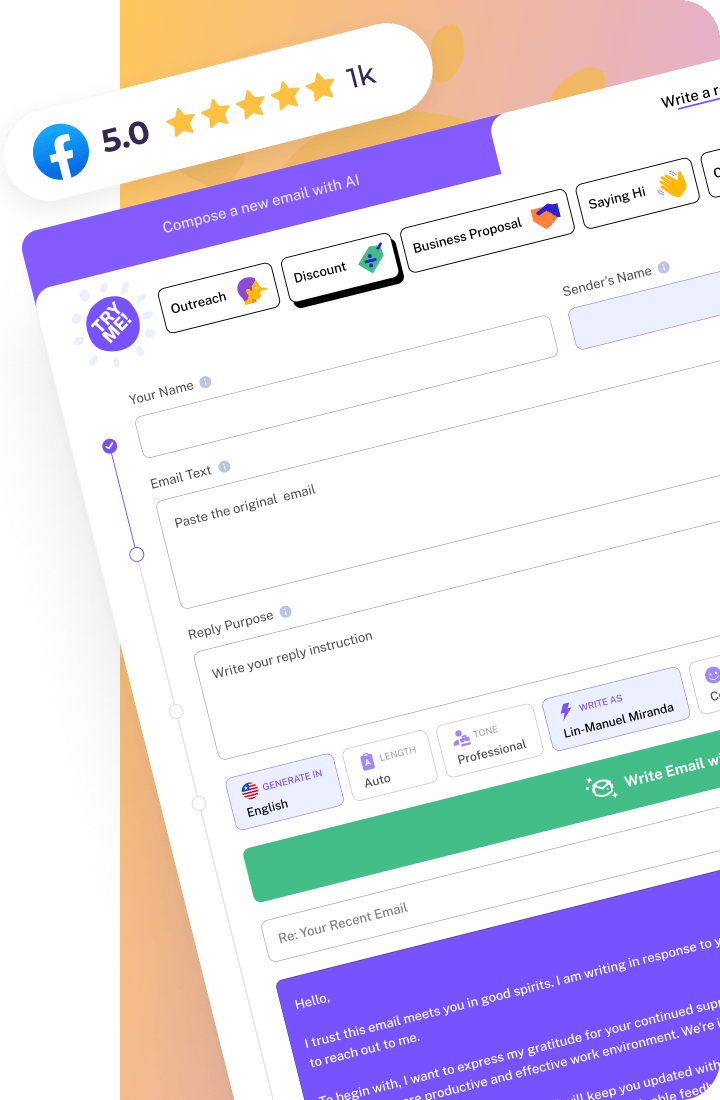




A rep at a mid-market SaaS company told me recently that she’d sent 600 personalized emails in a single afternoon. She was proud of the number. Then she read three of them back to me, and we both went quiet. Every one opened with the same cadence: a compliment about a recent LinkedIn post, a transition sentence, a soft ask. Different names, different companies, same skeleton underneath. The personalization was real in the sense that the facts were correct. It was fake in the sense that no buyer on earth would read it and feel seen.
This is the central tension in B2B sales communication right now. AI has made it trivially cheap to produce outreach that looks personalized, and trivially obvious to any buyer receiving it that it wasn’t. The volume has gone up. The bar for what gets a reply has gone up faster.
Where has AI genuinely changed how sellers communicate with buyers? Prospecting and personalization. Email generation. Conversation intelligence. Forecasting. Buyer-facing chat. And underneath all of it, a counter-trend I think most sales teams are underestimating: as generated outreach floods inboxes, the thing that breaks through is changing in a way that tools alone can’t fix.
Prospecting got cheap
The research layer is where AI has delivered the clearest, least controversial win. Five years ago you’d spend forty minutes on a prospect’s website, their LinkedIn, recent news, and earnings calls before a meeting, then cobble together a one-pager. Now that same prep happens in minutes, and the output is often better than what you’d have produced manually – more complete, more current, less likely to miss the acquisition announcement from last Tuesday.
The numbers back this up. LinkedIn’s research on AI in B2B sales found that 38% of sellers who use AI to research leads and companies save more than 1.5 hours per week, and that’s a conservative figure for the reps who’ve built real workflows around it.
Salesforce’s 2026 State of Sales report found that 87% of sales organizations now use some form of AI for prospecting, forecasting, lead scoring, and drafting email, and that top performers are 1.7 times more likely to use AI agents than struggling teams. The same report expects AI agents to cut sellers’ research time by 34%, which lines up with the hours the LinkedIn cohort is already reclaiming. The gap between teams using this well and teams not using it at all is widening into a competitive moat.
I’d push back on the optimism here, though. Cheap research has a hidden cost. It lowers the activation energy for sending outreach, which means more outreach gets sent, which means buyers receive more outreach, which means the marginal value of each additional message drops. Gartner makes a related prediction that I think undersells the shift: they project that by 2027, 95% of seller research workflows will begin with AI, up from less than 20% in 2024. That figure is about the research, not the outreach. It says 95% of the research will be automated. The research is the input. The output – the message a buyer actually reads – is a separate problem, and it’s the one that matters.
Personalization that lands
The failure mode I described at the start – correct facts, identical skeleton – is what happens when teams confuse personalization with variable insertion. Dropping a first name, a company, and a recent funding round into your template is not personalization. It’s mail merge with better data. Your buyers can tell, and they’re getting faster at telling.
What actually lands is harder to automate: a point of view about why this specific problem matters to this specific company right now, tied to something the buyer would have to go out of their way to dismiss. That requires a judgment call, and judgment calls are still the part AI does worst. The tools can surface that a prospect’s churn rate spiked last quarter. They can’t reliably tell you whether that’s the right hook to open with, or whether mentioning it will feel like surveillance.
My rule of thumb, from working with sales teams on this: use AI to gather the raw material and to draft the first pass, then have a human make one editorial decision the AI couldn’t – which detail to lead with, which to bury, which to cut. If the human isn’t making that call, you’re sending the same email as everyone else who bought the same tool.
Email generation
This is the area I get asked about most, and it’s where the gap between what AI does well and what it does badly is widest.
What it does well: first drafts, structure, the mechanical act of turning a set of bullet points into prose. If you have the key facts – the trigger, the value, the ask – a decent model will produce a usable cold email in seconds. For reps who hate writing, this is genuinely liberating. A lot of people who were bad at email are now acceptable at it.
What it does badly: voice. Models have a default register. Upbeat, slightly formal, fond of em-dashes and three-item lists, and without careful prompting they flatten everything toward it. I can usually tell an AI-drafted sales email within two sentences, and I’m not special; your buyers can too. The tells are consistent. The “I came across your recent post and wanted to reach out” opening. The “I’d love to learn more about your priorities” non-ask. The closing that’s polite to the point of being forgettable.
The deeper problem is buyer fatigue, and it’s growing faster than the technology is improving. LinkedIn’s report found that sellers who improved their response rates by using AI saw an average lift of 28%, and that 69% of sellers using AI cut their sales cycle by an average of a week. Those are real gains, for now. But they’re averages measured against a baseline of mostly-human outreach. As the share of AI-generated outreach climbs, the baseline shifts. The 28% lift is a snapshot of a moving target. My read is that the teams still seeing that lift are the ones using AI to draft and humans to edit; the teams seeing diminishing returns are the ones who took the draft and hit send.

Conversation intelligence, mostly underused
Call recording and transcription have been around long enough that they feel mundane, but the analysis layer is where the real change is, and most teams are barely scratching it.
The basic value is obvious: every customer call becomes searchable text. You can ask what objections came up across your last 200 discovery calls, which competitors got mentioned, which features buyers asked about that aren’t on your roadmap. That’s a research asset that didn’t exist before. You used to know your own pipeline; now your manager can know the whole team’s conversations in aggregate.
What teams actually do with it, in my experience, is more limited. Most use it for coaching – pulling clips of reps handling objections well or badly, building a library of what good sounds like. That’s valuable, but it’s a fraction of what’s possible. The underused move is feeding conversation intelligence back into the messaging itself. If the same objection surfaces in 40% of calls, your outbound should address it before the buyer raises it. If a competitor keeps coming up in deals you’re losing, your prospecting should pre-empt it. The intelligence is sitting right there in the transcripts. Most teams capture it and don’t circulate it.
There’s a trust dimension here that doesn’t get enough attention. Buyers know they’re being recorded. Most don’t mind, but some do, and the ones who do will tell you. How you handle that tells them something about how you’ll handle their data later. I’ve watched reps fumble the consent moment and lose the room in the first thirty seconds. The technology is fine. The etiquette around it is still being written.
Forecasting
AI hasn’t “solved” forecasting – the idea that any tool can predict revenue to the penny is a vendor story – but it has changed what goes into a forecast. Pipeline signal is no longer just stage and amount. It’s email reply latency, meeting attendance, document engagement, sentiment in call transcripts, the gap between what a buyer said and what they did. The inputs are richer, and the models are better at weighting them.
Whether the forecast gets more accurate is a different question, and I’m skeptical of the clean claims. What I’ve noticed is that AI-augmented forecasts are better at catching the deals that are quietly dying – the ones where a buyer has gone silent, where engagement dropped, where the sentiment in your last call turned without anyone flagging it. That’s genuinely useful. It saves you from carrying dead weight in your number.
What it doesn’t do is fix the human incentives that distort forecasts in the first place. A rep who needs a deal to close this quarter will find a way to mark it commit regardless of what the model says. The model can tell you the probability. It can’t make the rep honest. The best teams I’ve seen use AI forecasting as a prompt for a conversation – “the model’s less confident than you are; walk me through why” – rather than as a replacement for one. The worst teams treat the number as truth and stop interrogating it. If your forecast meetings have stopped including that question, that’s the first sign the tool is doing your thinking for you.
Buyer-facing chat, and the response-time reset
This is where buyer expectations have shifted most visibly, and it’s the area where AI is doing something genuinely new rather than just speeding up an old task.
A buyer who hits your pricing page at 9:47 p.m. used to fill out a form and wait. Now they get a chat window, and they expect an answer. The old benchmark – respond within 24 hours – is, for a growing share of buyers, not a benchmark but an insult. Buyers have been trained by consumer experiences to expect near-instant replies, and B2B is catching up whether you like it or not.
The first-generation answer was the chatbot that couldn’t really do anything. The one that asked you to rephrase your question three times and then offered to connect you to a human. We’ve all hated that bot. The current generation is meaningfully better: it can answer product questions, qualify intent, book a meeting, and hand off to a rep with context. For the routine 80% of buyer questions, that’s a real win. Your buyer gets an answer at 9:47 p.m.; your rep gets a warmer handoff in the morning.
The risk is the other 20%. When a buyer has a genuinely complex question – “we’re on a custom contract and need to know how this integrates with our legacy billing” – and the bot gives a confident, generic answer, the damage is worse than no answer. It erodes trust faster than silence would have. The line between “helpful at 9:47 p.m.” and “actively misleading” is thin, and it’s drawn by what the bot knows to defer. The best deployments I’ve seen are aggressive about escalation: the bot is allowed to do a lot, but it’s tuned to recognize the limits of what it can do and hand off early. The worst ones are tuned to never hand off, because the team measured chat resolution rate instead of chat resolution quality.
What breaks through when everyone has the same tools
This is the part I think gets under-discussed, and it’s the most interesting thing happening in this space.
Every sales team is buying the same category of tools. The same prospecting agent, the same email generator, the same conversation intelligence platform. When everyone has the same capability, that capability stops being a differentiator. It becomes table stakes – the cost of staying in the game, not a way to win it. Your buyers can’t tell your tool from your competitor’s tool, because they’re the same tool.
So what breaks through? My read, from watching this for the last two years, is that the breakthrough is moving in the opposite direction from the technology. As outreach volume rises and messages converge on the same AI median, the things that earn a reply are the things the AI can’t fake: a genuinely specific point of view, a real reason this person is being contacted by this person, a moment of actual insight that couldn’t have been written about any other buyer.
I’ve started to notice a pattern in the outreach that gets me to reply. It’s almost never the polished, well-structured, three-paragraph AI email. It’s the slightly messy one that leads with something I actually care about – a specific problem I’d written about, a decision my company was visibly wrestling with – and that sounds like a person wrote it on a Tuesday afternoon because they had a thought, not because a sequence fired. Sometimes it’s shorter than it should be. Sometimes it has a typo. The common thread isn’t polish. It’s that it couldn’t have been sent to anyone else. When you read your own outreach, ask yourself whether that’s true of it.
This is the counter-trend, and I think it’s the one sales leaders should be planning around. The teams that win the next two years won’t be the ones with the most AI. They’ll be the ones who use AI to clear the mechanical work – the research, the first drafts, the call notes, the forecasting inputs – and then invest the time they save into the parts that are hard to scale: a real point of view, a genuine reason for reaching out, a conversation that starts from the buyer’s reality instead of the seller’s sequence.
The mistake is treating AI as the message. It’s the scaffolding. The message still has to come from somewhere, and the somewhere is still a person who has something specific to say.
The part that’s still on you
If you’re leading a sales team right now, here’s what I’d do rather than just “adopt AI.”
First, separate your research workflow from your messaging workflow. Use AI aggressively for the first; use it as a draft engine for the second, and keep a human making the editorial call on what to lead with. If your reps aren’t making that call, you’re sending the median email.
Second, mine your conversation intelligence for messaging, not just for coaching. The objections surfacing in your calls are the objections your outbound should be pre-empting. Most teams leave this on the table.
Third, be honest about your buyer-facing chat. If it’s tuned to never escalate, it’s costing you trust in the 20% of cases that matter most. Measure resolution quality, not just resolution rate.
And fourth, the one that’s hardest to instrument: protect the parts of your communication that can’t be templated. The specific point of view. The real reason for reaching out. The moment that couldn’t have been written for anyone else. As the volume of generated outreach rises, those moments are what your buyers will reply to. They’re also the thing your competitors, running the same tools, will struggle to produce.
The technology has made communication cheaper. It hasn’t made it better on its own. That part is still on you.